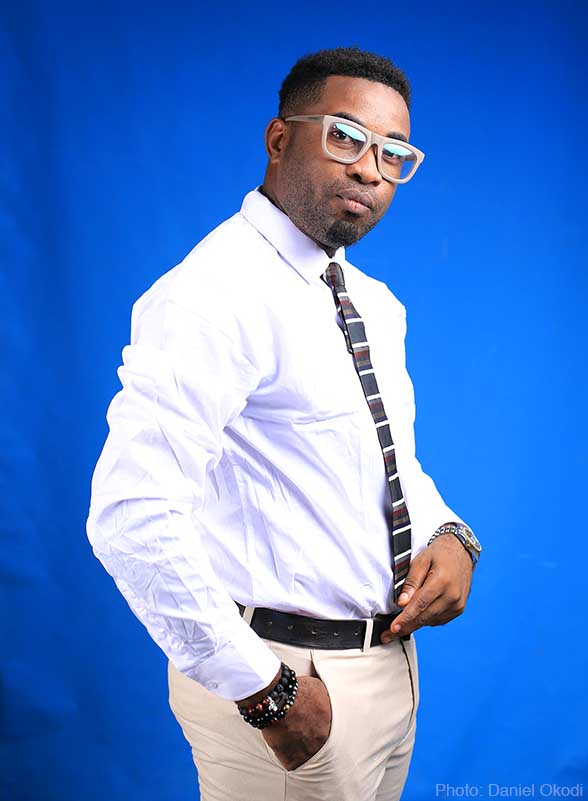
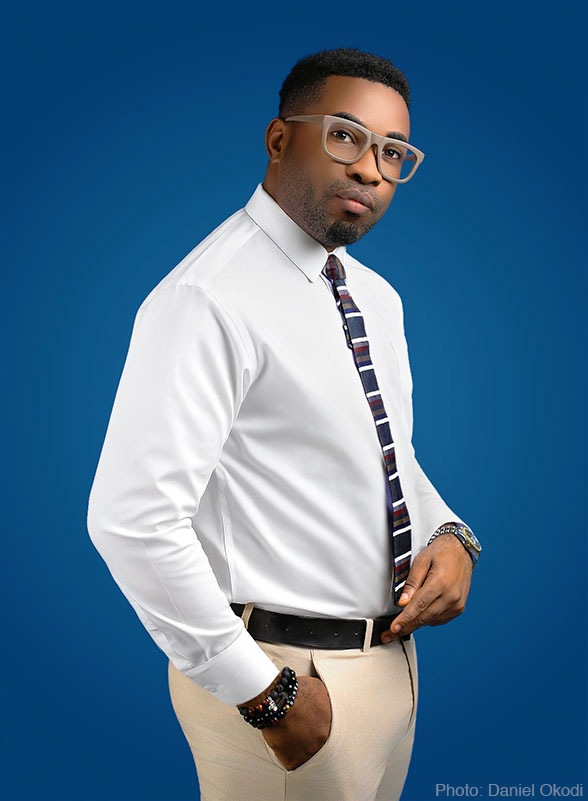
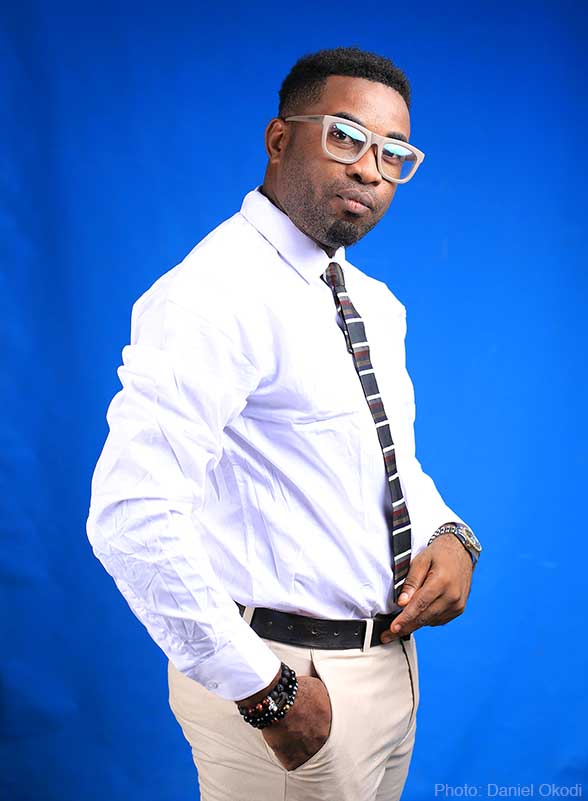
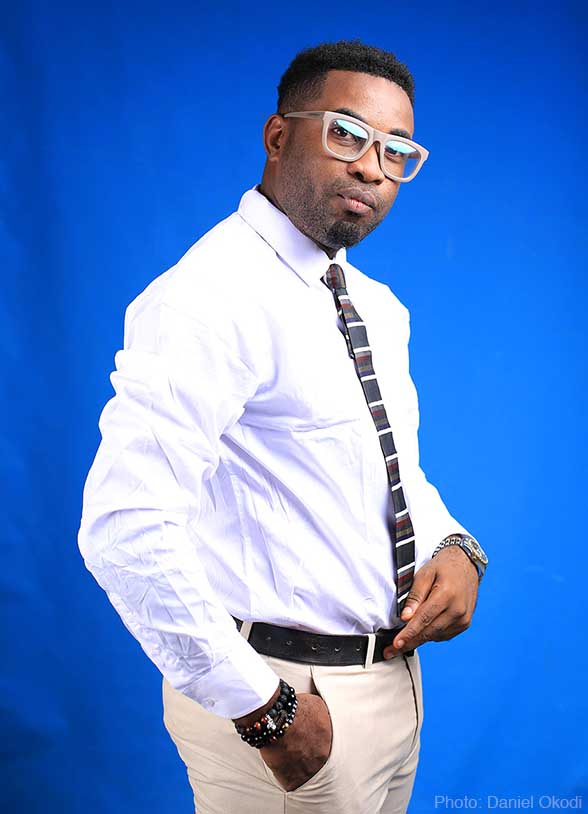
The original portrait (above) is a mess. The white shirt is very overexposed, wrinkled, and distracting. Big reflections in the eyeglasses obscure the subject’s eyes, and one eye has an odd, extra catchlight. The background is too bright, poorly lit, and wrinkled. On top of all that, the pose looks awkward.
The white shirt can be fixed manually, but it’s a time-consuming process. This is where artificially intelligent (AI) tools come in. AI can often replace simple clothing quickly, but the results may need further manual adjustments.
However a plain white shirt in a business portrait draws too much attention and pulls focus from the face. It also looks unfinished.
A Further Step
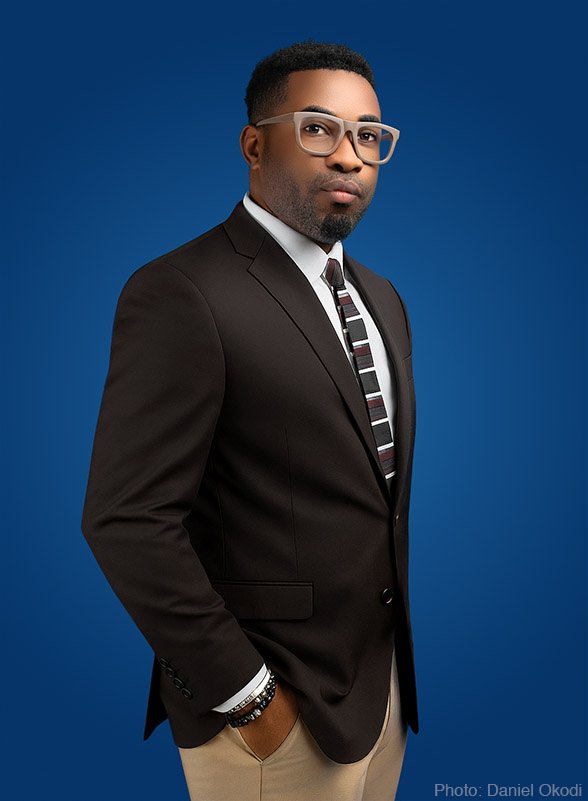
For this second version, AI was used to add a dark jacket. This gives the subject a more polished, professional look. The darker clothing also draws the viewer’s attention to the face, exactly where it should be in a business portrait.
Manual retouching techniques were used to remove an arm and straighten the head. This gives the subject a better posture and makes him look slimmer. Although, this new pose may still look a bit stiff.
A Big Leap

Unlike manual retouching, AI can sometimes rotate a person and make large changes to body pose. This third version still has several edits done manually.
AI tools have many limitations. But as they continue to improve, they’re making complex or time-consuming edits faster and easier. AI can also make changes that were previously impossible to do. The key for today’s photo retouching is knowing when to use AI and when to use manual retouching.
More information on my photo retouching services.
